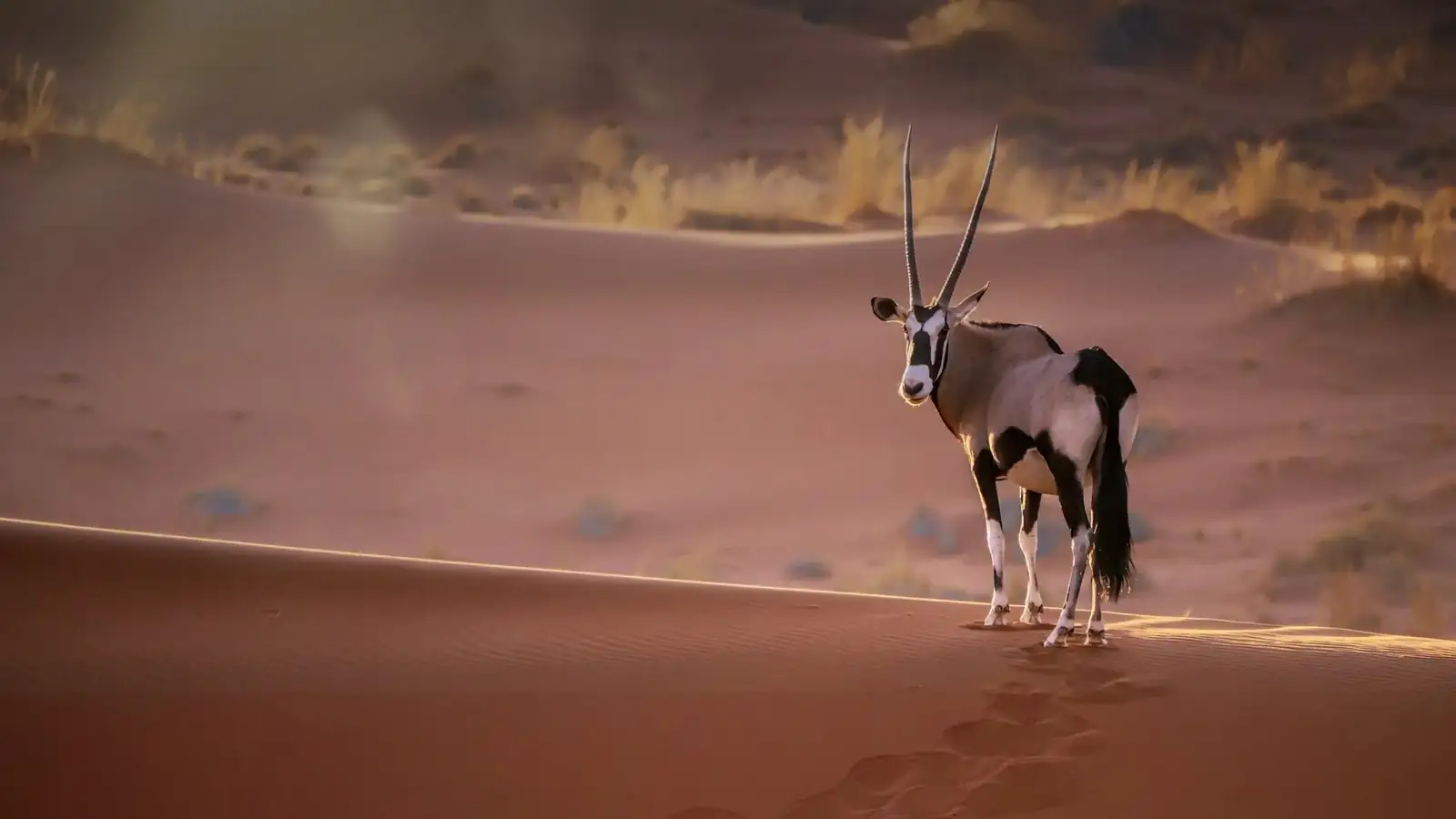
Oryx on a dune crest in the Namib in warm evening light
Home · Destinations · Namibia

Namibia –
space, wilderness and
unforgettable moments

Red dunes in the first light of morning, a herd of elephants at a waterhole on the Etosha Pan, and in the evening a starry sky like you hardly see in Europe any more: Namibia is a land of vast open spaces. With only around three million inhabitants in an area more than twice the size of Germany, it is one of the most sparsely populated countries in the world – and yet safe, well organised and wonderful to explore independently.

May to OctoberDry season – the most popular time to travel
+1 hourduring the German winter, no time difference in summer
Namibian dollarpegged 1:1 to the rand, which is also accepted
Englishofficial language; German is also spoken in many places
From the Namib to the Zambezi

Namibia's most beautiful regions

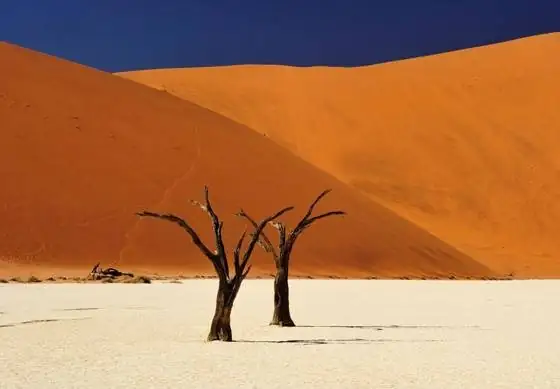
Dead camel thorn trees in Deadvlei in front of red dunes
Region I

The Namib with Sossusvlei and Deadvlei

Some of the highest sand dunes in the world rise in the Namib-Naukluft National Park. Around Sossusvlei they glow orange, red and violet depending on the time of day. In neighbouring Deadvlei, dead camel thorn trees have stood on a white clay pan for several centuries – one of Africa's most famous photo motifs.

An early start pays off: the colours are at their most intense in the morning light and the temperatures are still pleasant.

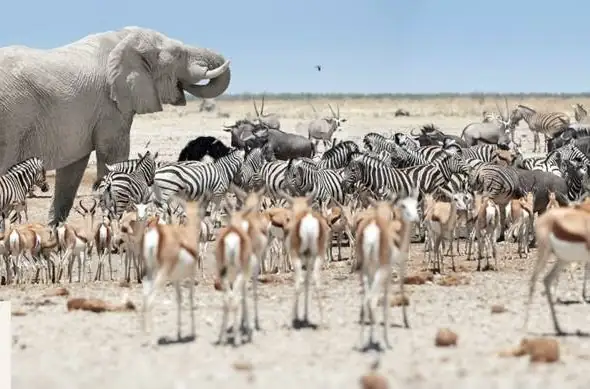
Elephant, zebras and springbok at a waterhole in Etosha National Park
Region II

Etosha National Park

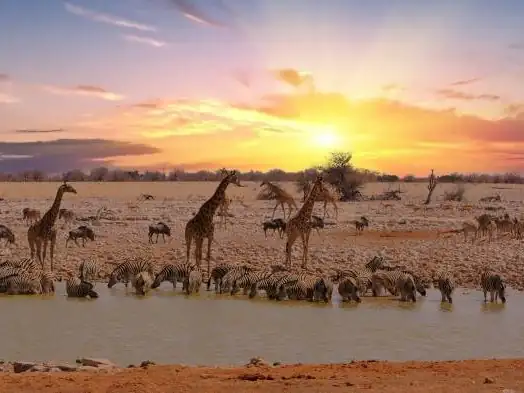
At the heart of the park lies the huge Etosha Pan, which shimmers dazzling white in the sun during the dry season. Elephants, giraffes, zebras, oryx and springbok gather at the waterholes around the pan, often watched by lions. The park is ideal for self-drive safaris.

Several rest camps in the park have floodlit waterholes – perfect for watching animals after sunset.

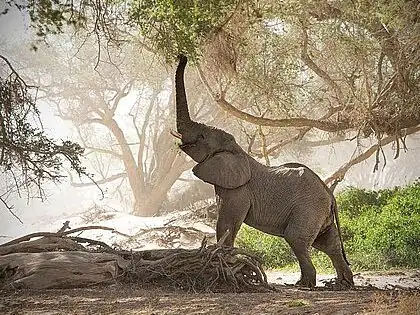
Desert elephant reaching its trunk towards the leaves of a tree in a dry riverbed
Region III

Damaraland and the desert elephants

Table mountains, red granite rocks and wide plains shape Damaraland. At Twyfelfontein, rock engravings thousands of years old have been preserved and are a UNESCO World Heritage Site. Desert elephants, adapted to life with very little water, live in the region's dry riverbeds.

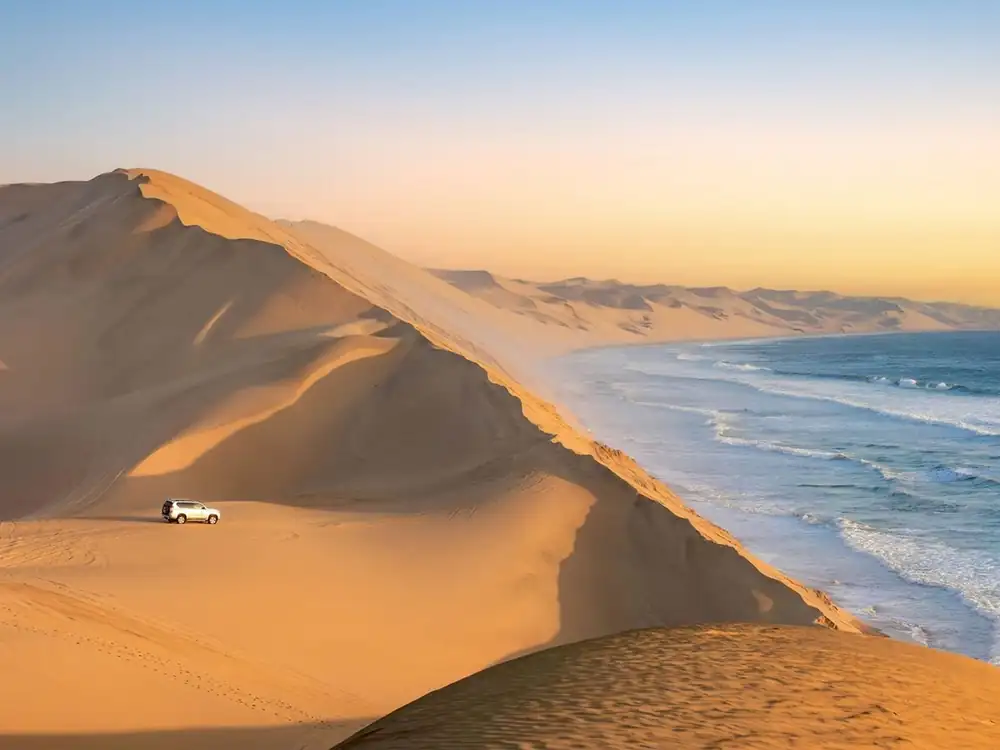
4x4 in the dunes at Sandwich Harbour, where the desert meets the Atlantic
Region IV

Swakopmund and the Atlantic coast

Where the desert meets the cool Atlantic lies Swakopmund with its colonial buildings, cafés and restaurants. From here you can take a boat into the Walvis Bay lagoon to see seals, dolphins and flamingos, or a 4x4 into the dunes around Sandwich Harbour.

Because of the Benguela Current, the coast is often foggy and cool – pack a warm jacket even in summer.

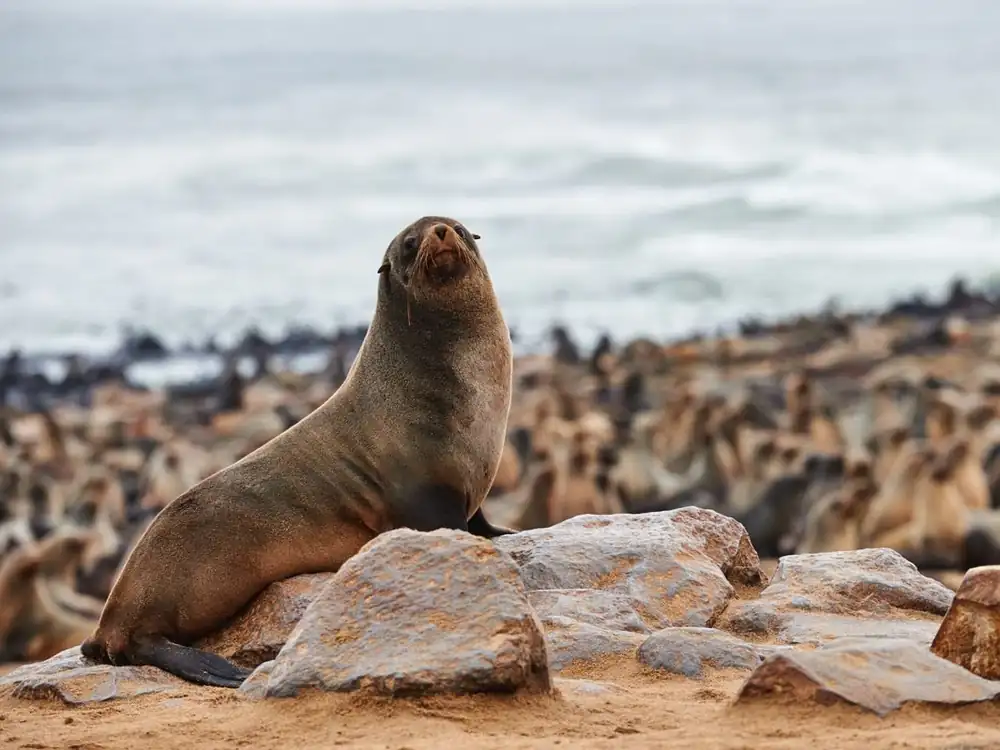
Fur seal on rocks in front of the seal colony on the Atlantic
Region V

The Skeleton Coast

North of Swakopmund the coast becomes lonely and rugged. Shipwrecks in the sand, banks of fog over the sea and a large seal colony at Cape Cross give this region its special, almost unreal character.

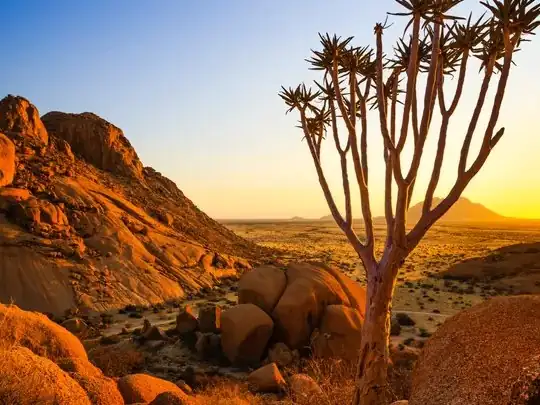
Quiver tree among granite rocks, the Spitzkoppe in the background at sunset
Region VI

Erongo Mountains and Spitzkoppe

The granite peaks of the Spitzkoppe rise dramatically from the flat plain and are often called the "Matterhorn of Namibia". San rock paintings can be found in the Erongo Mountains and at the Spitzkoppe. At sunset the rocks glow a warm red – a wonderful place to spend a night under the open sky.

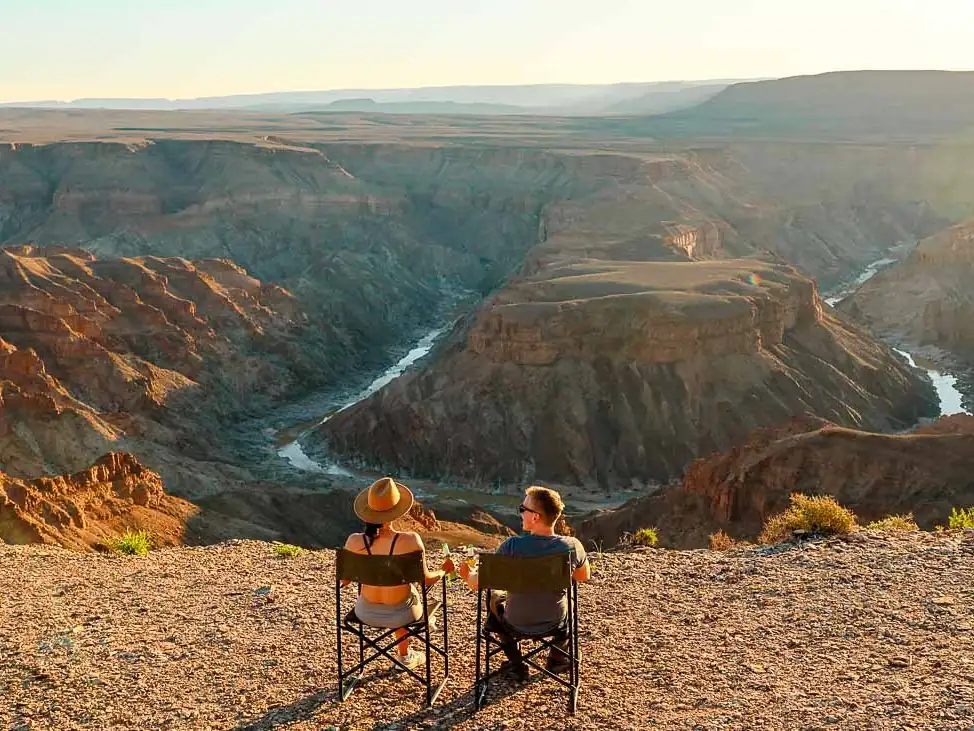
Two travellers on camping chairs at the edge of the Fish River Canyon
Region VII

Kalahari and Fish River Canyon

To the east stretch the red, grass-covered dunes of the Kalahari – perfect for a relaxed first day after arrival. Further south, the Fish River has cut deep into the rock over millions of years: the Fish River Canyon is one of the largest canyons on earth.

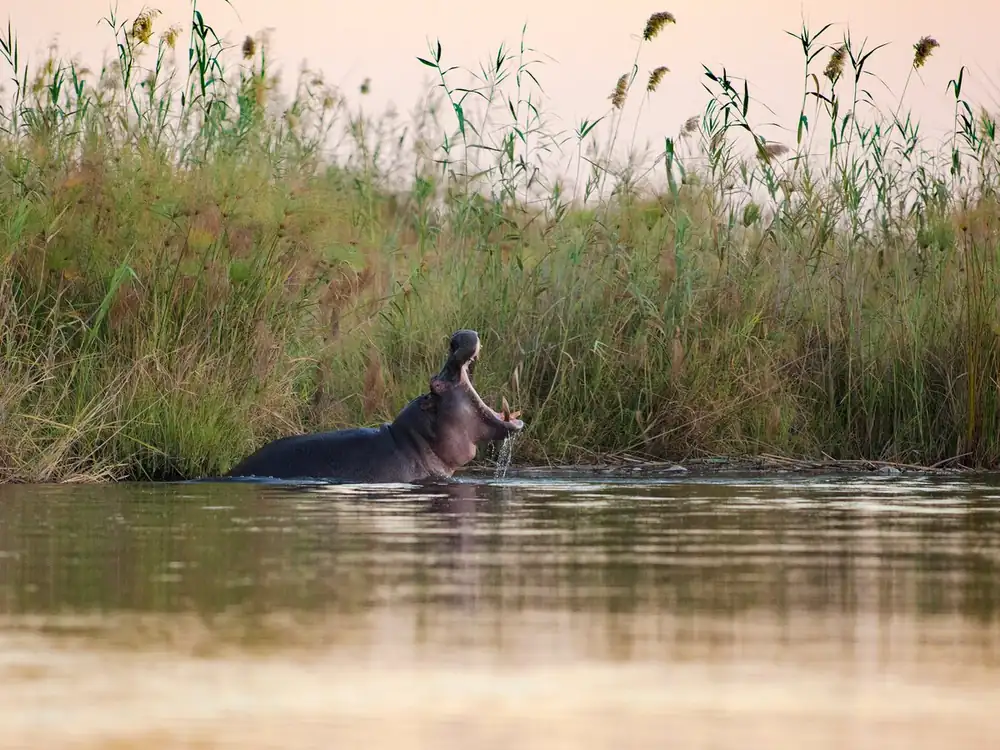
Yawning hippo in the water in front of tall reeds
Region VIII

The Zambezi Region (formerly Caprivi)

In the far north-east, Namibia shows a completely different side: green, rich in water and crossed by rivers such as the Kwando, Chobe and Zambezi. Hippos, crocodiles, large herds of elephants and impressive birdlife live here. The region combines well with Botswana and Victoria Falls.

Experience the wilderness

Nature and wildlife

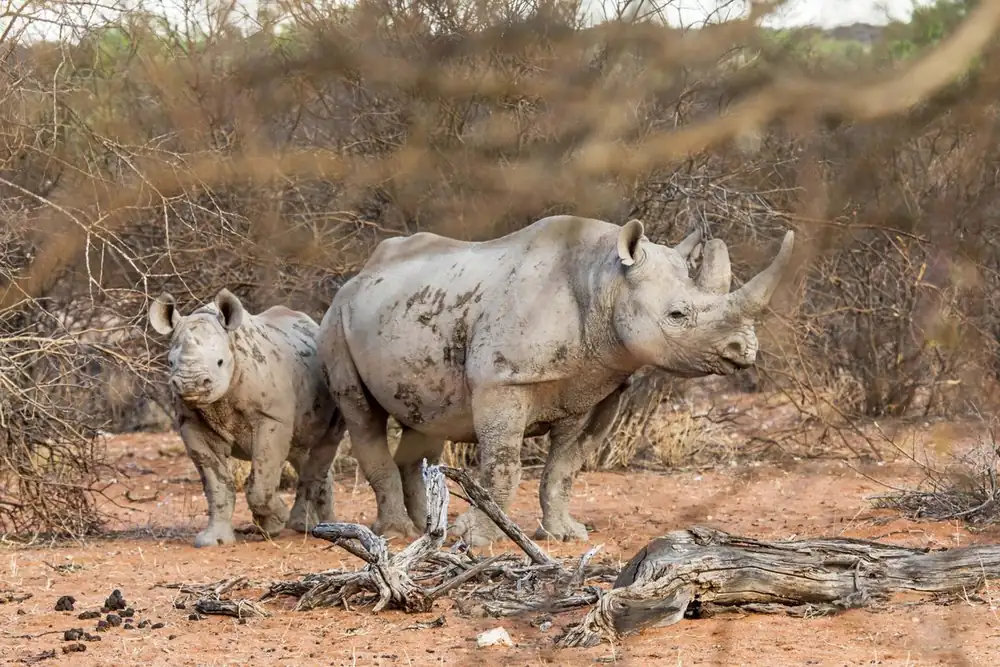
Namibia is a country of animals that have adapted to their sparse surroundings. Oryx survive long periods without water, desert elephants cover great distances between waterholes, and black rhinos also find an important habitat in Namibia.
Add to that lions, giraffes, zebras, springbok, kudu and many other antelope species.

National park, private reserve or desert?

In Etosha National Park you drive yourself and decide how long to stay at a waterhole. In private reserves on the edge of the park, experienced guides take you out in open vehicles, often on foot or after sunset too.

In the desert and in Damaraland, the number of animals matters less than the special encounters – with desert elephants or oryx in a seemingly lifeless landscape, for example.

Wildlife is nature

Wild animals don't keep to a timetable. But with the right season, enough days in the protected areas and a little patience, your chances are very good.

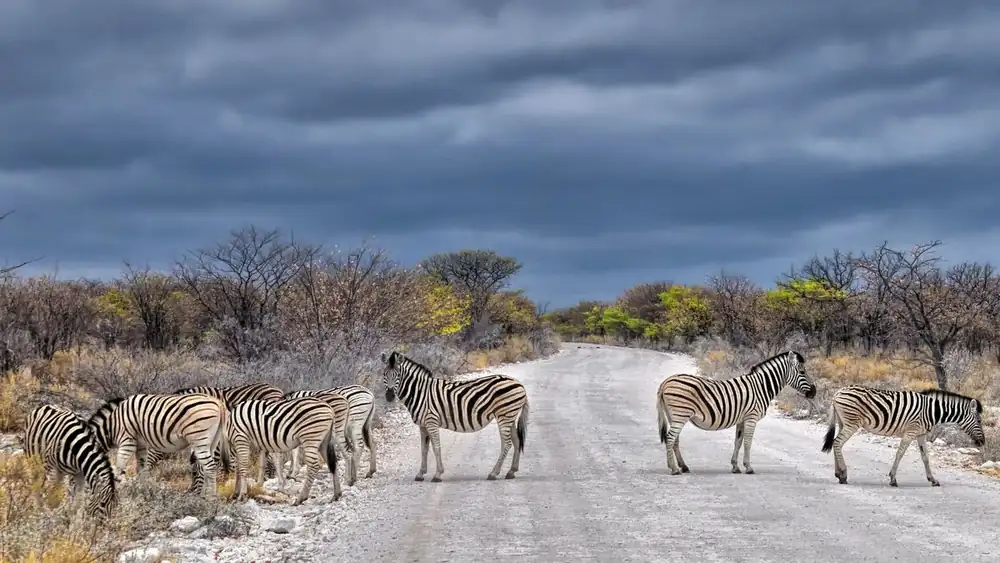
Giraffes and zebras at a waterhole in Etosha National Park at sunset Zebras crossing a gravel road under a dark stormy sky Black rhino with calf in dry bushland
When is the best time?

The best time to visit Namibia

Namibia is a rewarding destination all year round. Because the country lies in the southern hemisphere, its seasons are the opposite of Europe's – and the climate varies considerably by region:
in the desert it is hot by day and cool at night, while the coast is often foggy and fresh.

JFMAMJJASOND
Wildlife viewing in Etosha
Desert, Damaraland & coast tour
Zambezi Region
idealgoodless typical

May to October: dry season

It hardly rains and the sky is usually cloudless. In Etosha the animals gather at the waterholes and are particularly easy to watch. From June to August, nights in the desert can be bitterly cold; towards the end of the dry season it gets very warm during the day.

November to April: rainy season

Short, heavy afternoon thunderstorms bring rain, especially in the north and east. The landscape turns green, many animals give birth and migratory birds return. It's hot, but there are fewer travellers about.

All year round: desert and coast

The Namib and Sossusvlei can be visited all year round; in summer, early mornings are especially important. Thanks to the cold Atlantic, the coast stays mild and often foggy all year.

The best time to travel depends on what matters to you. We're happy to advise which route and which accommodation suit your travel dates.

Just your style

How to travel Namibia

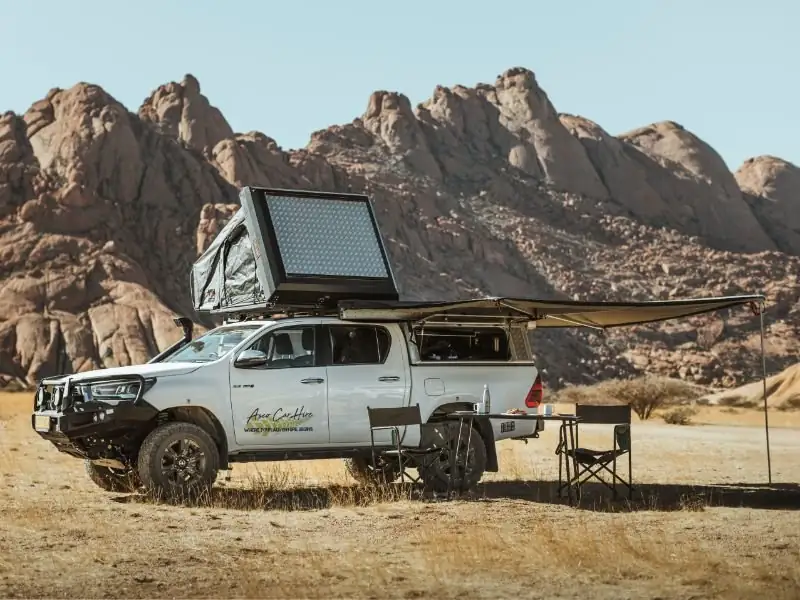
4x4 with rooftop tent in front of the granite rocks of the Spitzkoppe

Self-drive with a rental car or rooftop tent

Namibia is one of Africa's most beautiful self-drive countries. Many routes run along good gravel roads; allow a full day's driving for distances of 300 to 400 kilometres. We plan the route and accommodation so that there's plenty of time to enjoy it.

Our self-drive trips
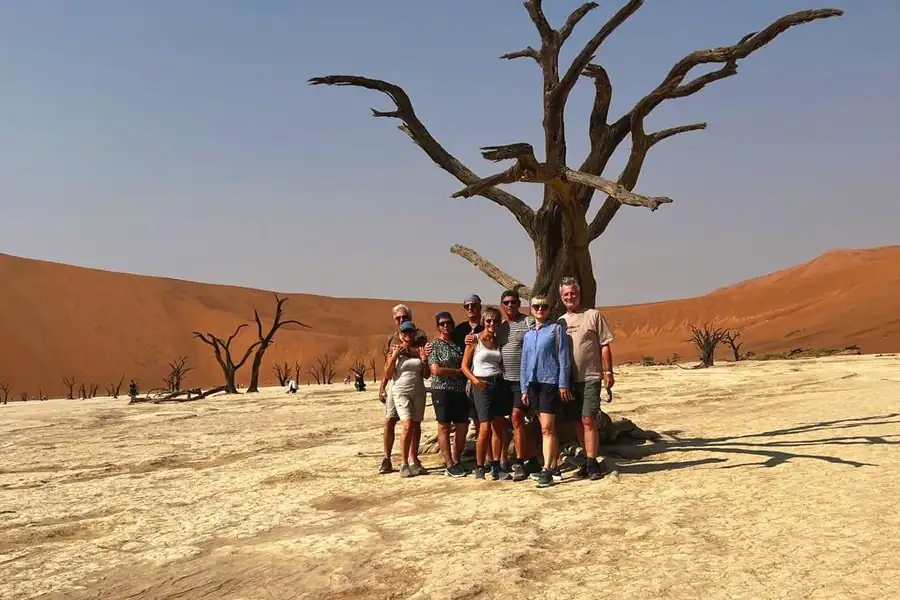
Small tour group in Deadvlei

In a small group

Together with a few like-minded travellers and an experienced tour leader, you discover Namibia's highlights – relaxed, sociable and without having to drive yourself.

Our small group tours
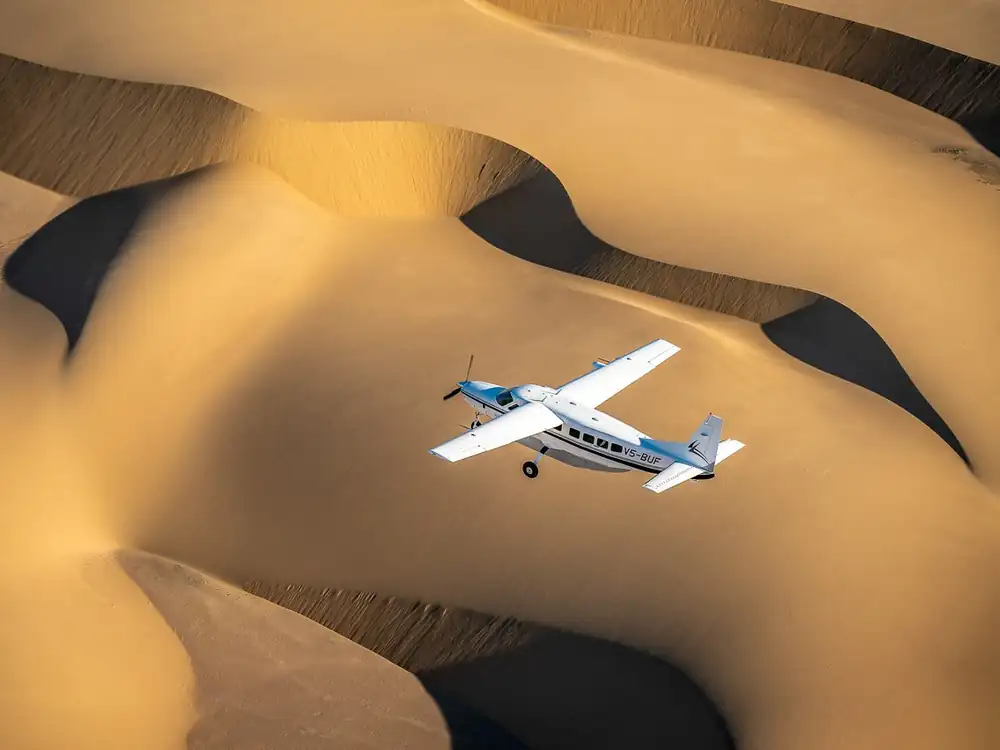
Light aircraft over the dunes of the Namib

With domestic flights and transfers

If you'd rather spend less time in the car, you can cover some stretches by light aircraft or be driven from lodge to lodge. We put together the right combination for you.

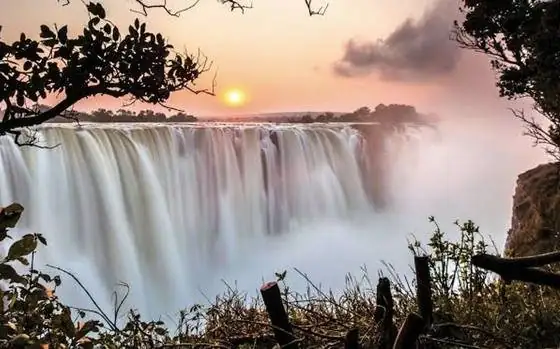
Victoria Falls

Namibia combined with neighbouring countries

Via the Zambezi Region, Namibia combines beautifully with Botswana, the Chobe area and Victoria Falls for a varied journey through southern Africa.

Accommodation for every taste

From family-run guest farms and guesthouses to lodges, tented camps and beautifully located campsites: we choose accommodation we know that suits your wishes and your budget.

One trip, many possibilities

Who is Namibia for?

Self-driversLittle traffic, good roads and spectacular stages.
Nature loversDesert, mountains, coast and wide plains in one trip.
PhotographersClear light, red dunes and starry skies.
Safari fansEtosha and private reserves with elephants, lions and rhinos.
CouplesSilence, space and special places to stay off the beaten track.
FamiliesRooftop tent adventures, guest farms or the coast.
Personally recommended

Our insider tips for Namibia

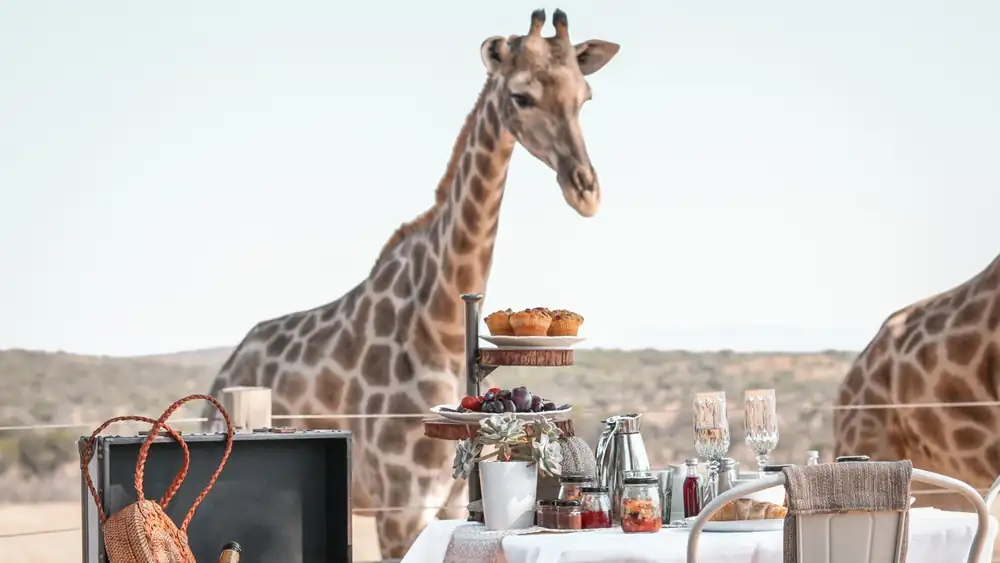
Outdoor breakfast table with two giraffes behind it
I

Breakfast with giraffes at Voigtland Guest House

Our favourite hotel in Namibia: this historic farmhouse from around 1900 lies between Windhoek and the international airport. With only a few rooms, it's personal and quiet – and the farm's own giraffes drop by at breakfast. Ideal for the first or last night of your trip.

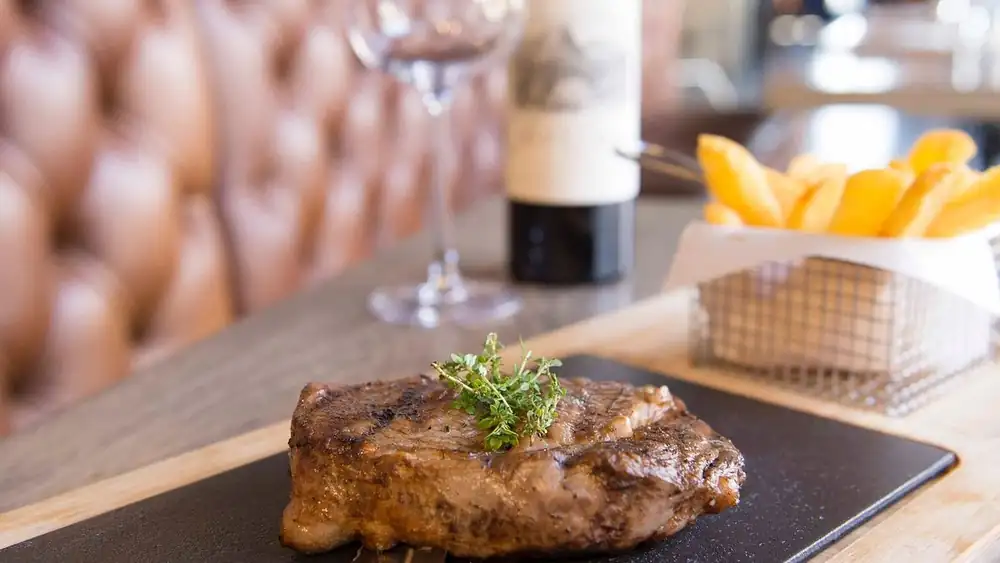
Steak with chips and red wine at the Butcher Block steakhouse
II

Butcher Block steakhouse in Windhoek

Butcher Block is located on the Am Weinberg Estate in Klein Windhoek, a former wine farm with a historic manor house. It mainly serves Namibian beef aged for at least 21 days. A lovely place for your first or last dinner in Windhoek – we recommend booking ahead.

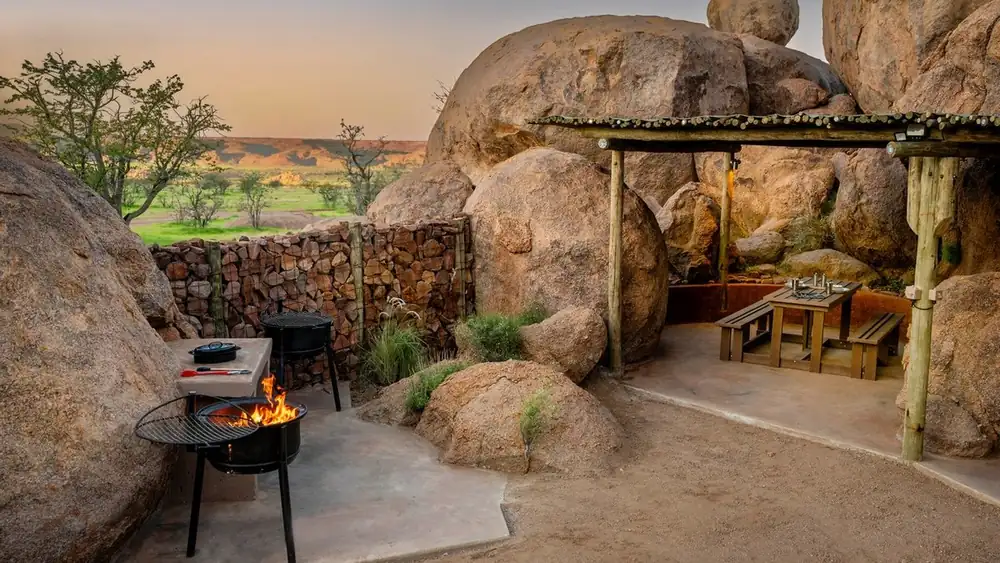
Pitch at Mowani Campsite with braai area and covered seating among granite rocks
III

Mowani Campsite – our favourite campsite

A little away from Mowani Mountain Camp in Damaraland, seven private pitches are hidden among huge granite boulders. Each has its own bathroom with shower and toilet, a washing-up area and a braai place; there's no electricity, and you bring your own food. The Twyfelfontein rock engravings are not far away.

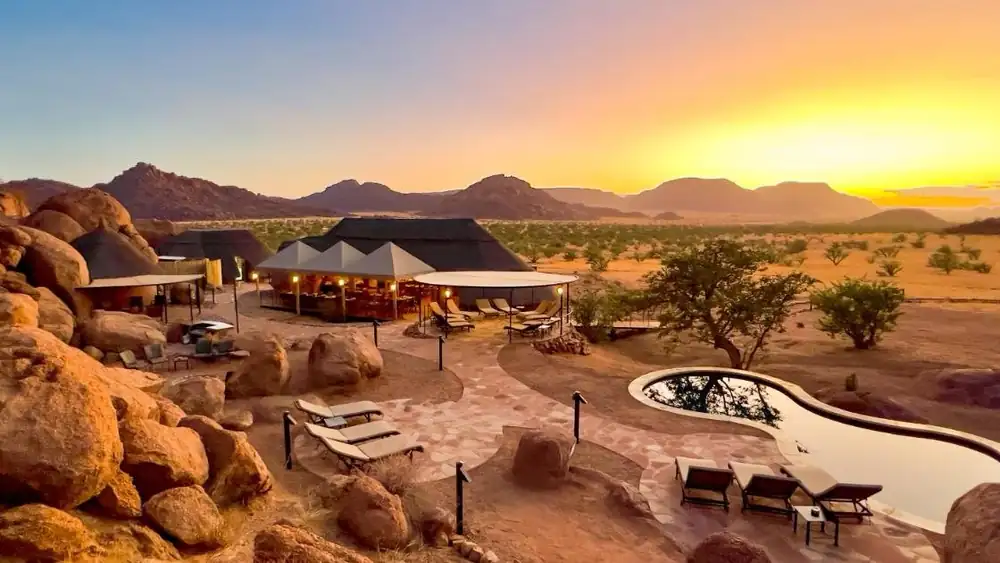
Twyfelfontein Adventure Camp with its pool among granite rocks in the evening light
IV

Sundowners at Twyfelfontein Adventure Camp

The camp sits high among granite rocks in the Aba-Huab valley, just a few minutes from the Twyfelfontein rock engravings. If you stay here, don't miss the sunset at the camp's sundowner spot: the view stretches far across the landscape of Damaraland.

Good to know

Frequently asked questions about Namibia

When is the best time to visit Namibia?

Namibia can be visited all year round. The most popular time is the dry season from May to October: it hardly rains, and in Etosha National Park the animals gather at the waterholes. From June to August, nights in the desert get cold; towards the end of the dry season it gets very warm during the day. On the coast around Swakopmund it is often foggy and cool all year because of the Benguela Current.

Is Namibia suitable for a self-drive tour?

Yes, Namibia is one of Africa's most beautiful self-drive countries. There's little traffic and many routes run along good gravel roads. Even so, you should allow a full day's driving for distances of 300 to 400 kilometres. You can explore Etosha National Park in your own vehicle and decide for yourself how long to stay at a waterhole.

Rental car with lodges or rooftop tent – which suits me?

With a rooftop tent you stay at selected campsites in the middle of nature and travel very independently; it's close to nature and cheaper, but involves more doing it yourself. With a rental car and fixed accommodation – from guest farms to lodges and tented camps – you travel more comfortably. The two can also be combined.

Can Namibia be combined with other countries?

Via the Zambezi Region in the north-east, Namibia combines well with Botswana, the Chobe area and Victoria Falls in Zimbabwe. One example is our 3 Countries Tour with 14 nights from Windhoek to Victoria Falls.

Entry, visas and health

Current entry requirements and vaccination recommendations are available from your government's travel advice service. For German travellers, the German Federal Foreign Office provides details and links to online visa applications.

Namibia: travel advice from the German Federal Foreign Office (in German)
Africa, personally

Dreaming of Namibia?

Whether self-drive, with a rooftop tent or in a small group: we put together every Namibia trip around your wishes, the time you have and your budget. We look forward to planning your trip with you.