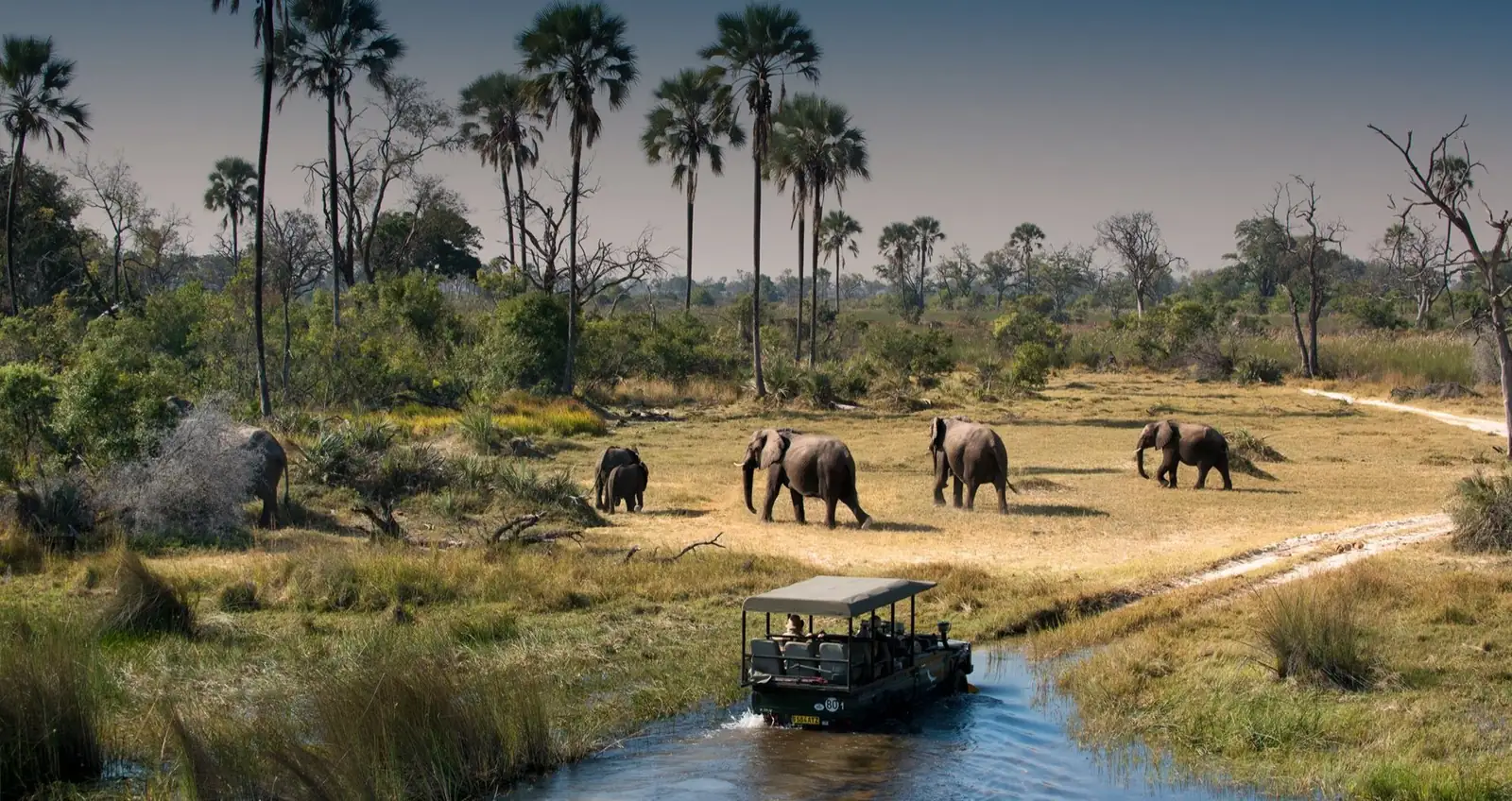
Elephants beneath palm trees in the Okavango Delta, a safari vehicle driving through the water in front
Home · Destinations · Botswana

Botswana – wilderness in its purest form

A mokoro glides silently through the papyrus channels of the Okavango Delta, herds of elephants make their way to the water along the Chobe, and in the salt pans of the Kalahari the view stretches to the horizon: Botswana is one of Africa's most unspoilt safari countries. Only around 2.4 million people live in an area roughly the size of France – leaving all the more wilderness for you to experience up close.

May to OctoberDry season – the most popular time for safaris
+1 hourduring the German winter, no time difference in summer
Pula (BWP)local currency, US dollars often accepted at lodges
Englishofficial language, alongside mainly Setswana
From the Okavango to the Kalahari

Botswana's most beautiful regions

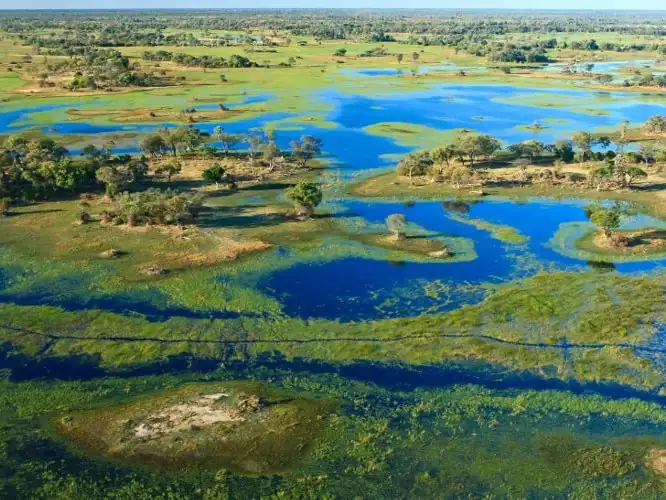
Waterways, lagoons and islands of the Okavango Delta from the air
Region I

The Okavango Delta

In the middle of the Kalahari, the Okavango fans out into one of the largest inland deltas on earth – a labyrinth of channels, lagoons, palm islands and floodplains. The water comes from the Angolan highlands and only reaches the delta months after the rainy season. The Okavango Delta has been a UNESCO World Heritage Site since 2014.

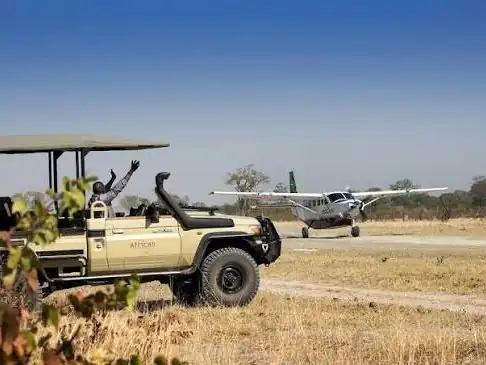
Many camps in the delta can only be reached by light aircraft – the flight is an experience in itself.

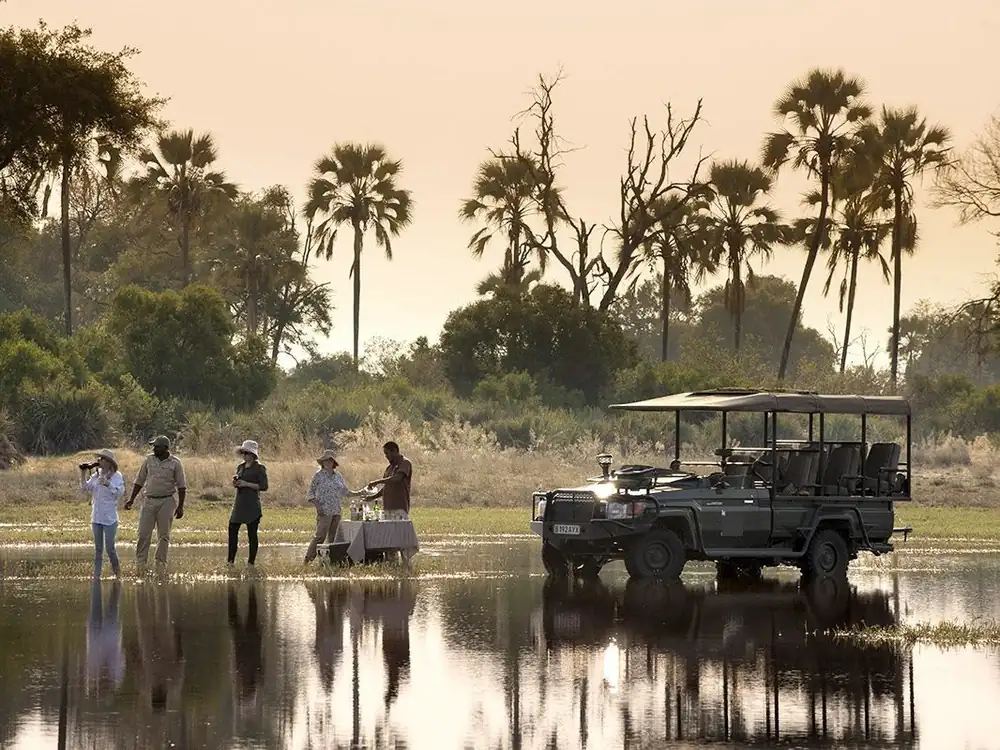
Sundowner on a game drive, guests and vehicle reflected in the water in front of palm trees
Region II

Moremi Game Reserve

The Moremi Game Reserve protects the eastern part of the Okavango Delta. Mopane woodland, open grassland, lagoons and waterways meet here – and the wildlife is correspondingly varied. Unlike many parts of the delta, Moremi can also be explored in your own 4x4.

Depending on water levels, some tracks may be flooded.
Ask locally about current conditions.

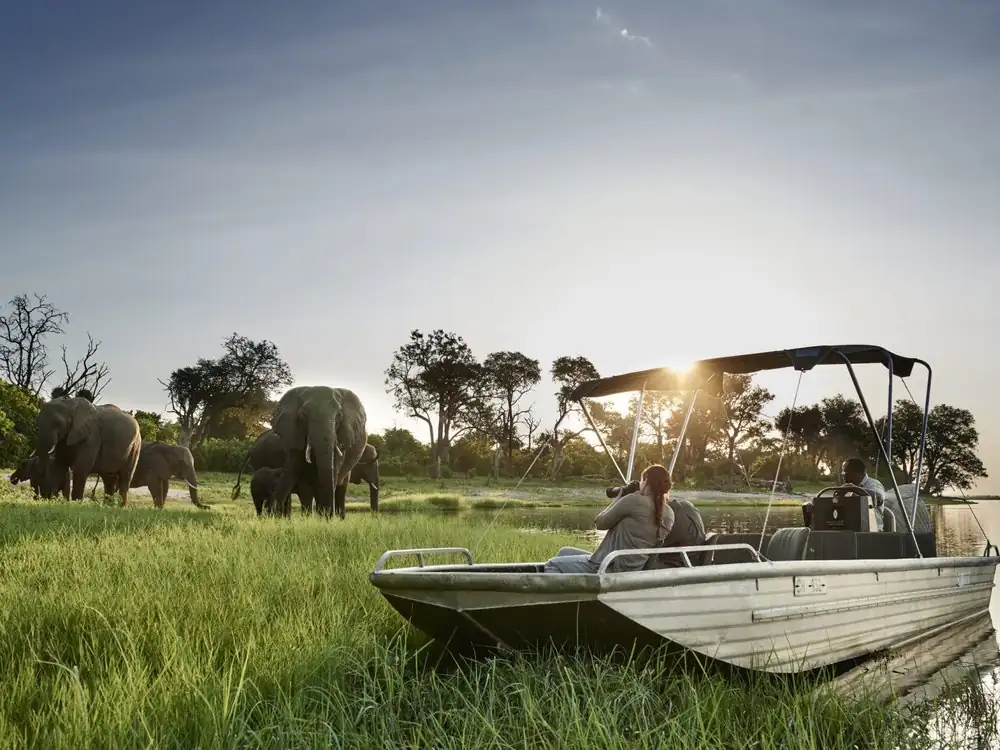
Guests photographing a herd of elephants on the banks of the Chobe from a boat
Region III

Chobe: national park and riverfront

In the north, the Chobe River forms the border with Namibia. Along the Chobe Riverfront near Kasane, large herds of elephants come down to drink and bathe in the dry season, along with buffalo, hippos and many antelope. A boat trip on the river is particularly impressive – and Victoria Falls is only around 80 kilometres away.

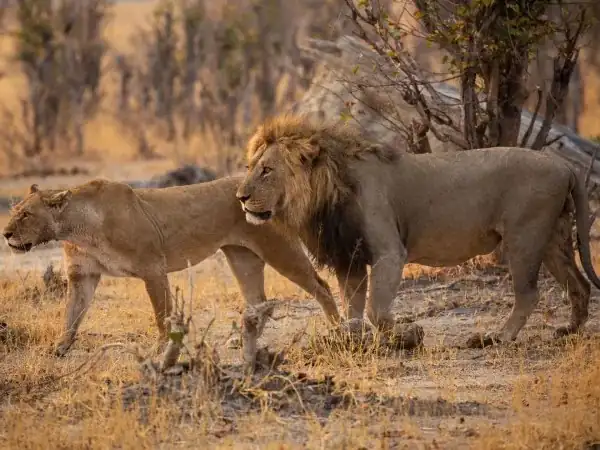
Lion and lioness in the dry bush of Savuti
Region IV

Savuti

In the west of Chobe National Park lies Savuti, a vast, open landscape of marshland, inselbergs and the Savuti Channel, which can be dry for years and then suddenly flow again. The region is known for its predators – especially lions and hyenas – and for its distinctive, rugged atmosphere.

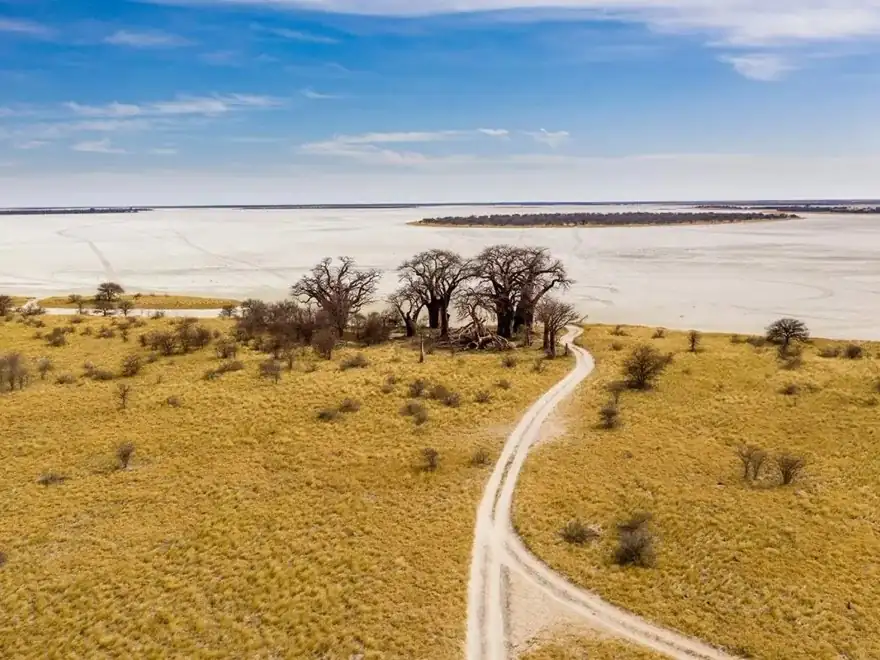
Baobabs on a grassy island at the edge of a vast salt pan, from the air
Region V

The Makgadikgadi salt pans and Nxai Pan

The Makgadikgadi Pans are the remains of a vast prehistoric lake and among the largest salt pans in the world. In the dry season they lie white and endless; in the rainy season large herds of zebra move into the green grasslands. The famous Baines' Baobabs stand in the neighbouring Nxai Pan National Park.

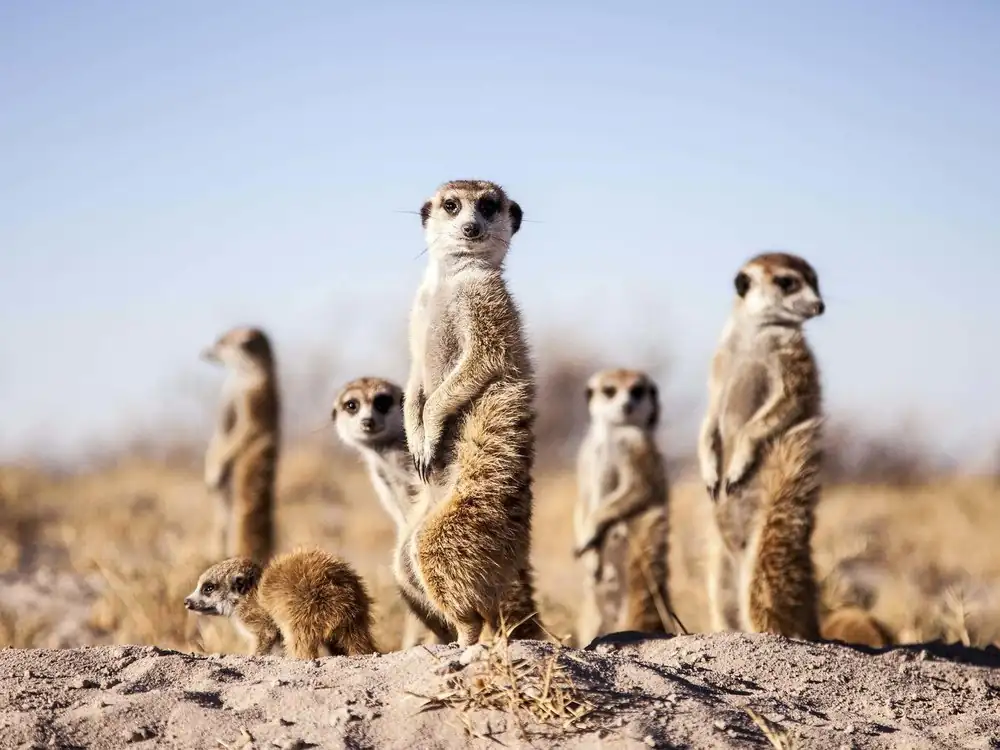
A meerkat family standing guard on their burrow
Region VI

Central Kalahari Game Reserve

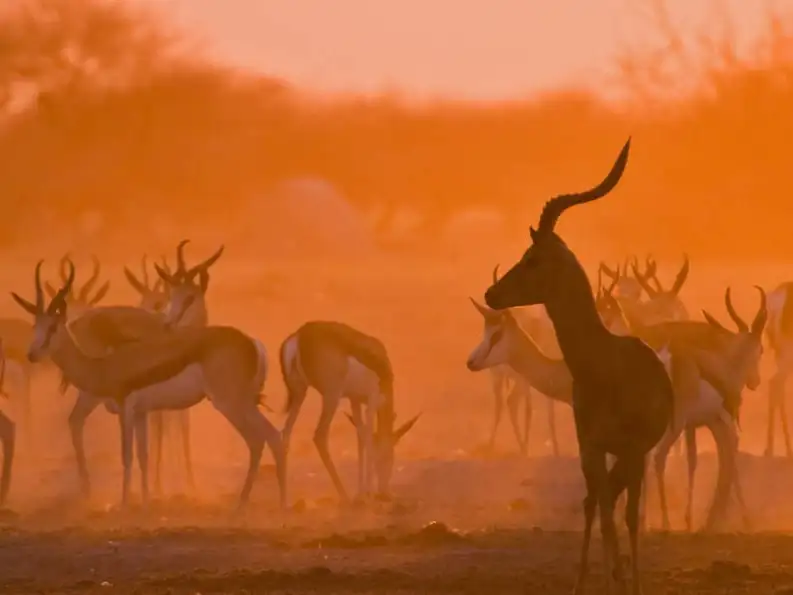
The Central Kalahari Game Reserve is one of Africa's largest protected areas: semi-desert with grassland, fossil river valleys such as Deception Valley and small pans. After the first rains, oryx, springbok and wildebeest gather here. It's very remote – there is no water and there are no facilities at the campsites.

Experience the wilderness

Nature and wildlife

With around 130,000 animals, Botswana is home to Africa's largest elephant population. There are also lions, leopards, cheetahs, African wild dogs, large herds of buffalo, giraffes, zebras and hippos.
The delta is home to water-adapted antelope such as lechwe and sitatunga, and the birdlife is exceptionally rich.
In the Kalahari and the salt pans you'll also encounter meerkats, oryx and springbok.

National park or private concession?

In national parks such as Chobe and Moremi you stay on the tracks, whether in your own vehicle or with a guide. In private concessions, depending on the area, night drives, off-road driving and guided walks are also possible – with a limited number of guests.

Safari on the water

In the Okavango Delta you also experience nature from the water: in a mokoro, the traditional dugout canoe, or by motorboat. Mokoro trips depend on water levels; at camps on permanent channels, boat trips are usually possible all year round. Wild animals don't keep to a timetable – but with the right season and a little patience, your chances are very good.

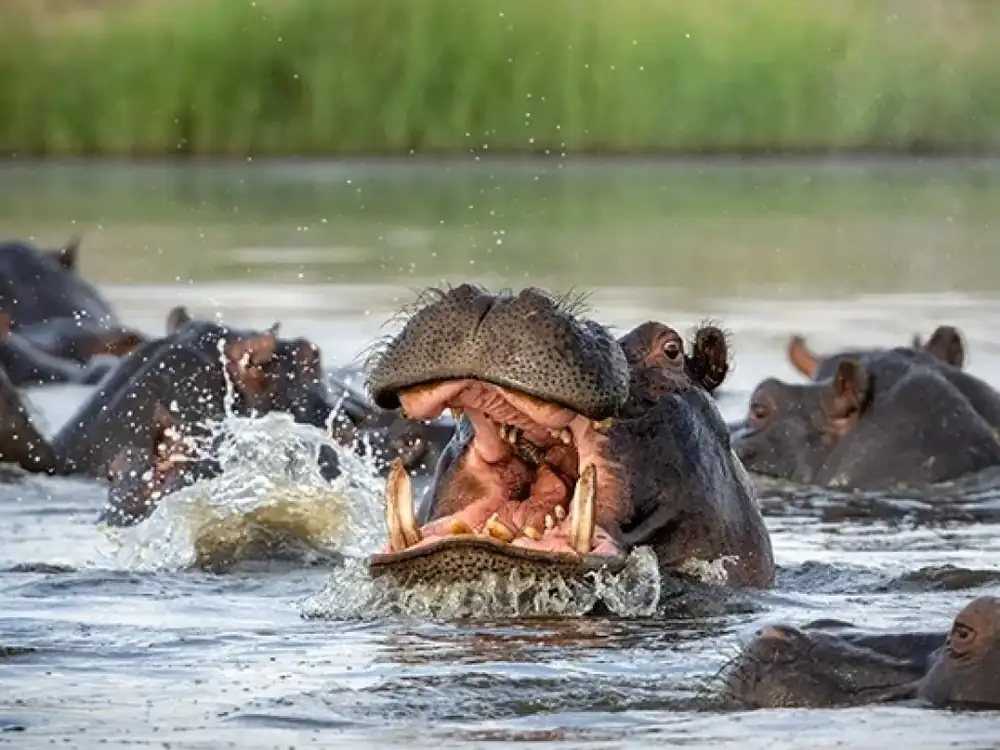
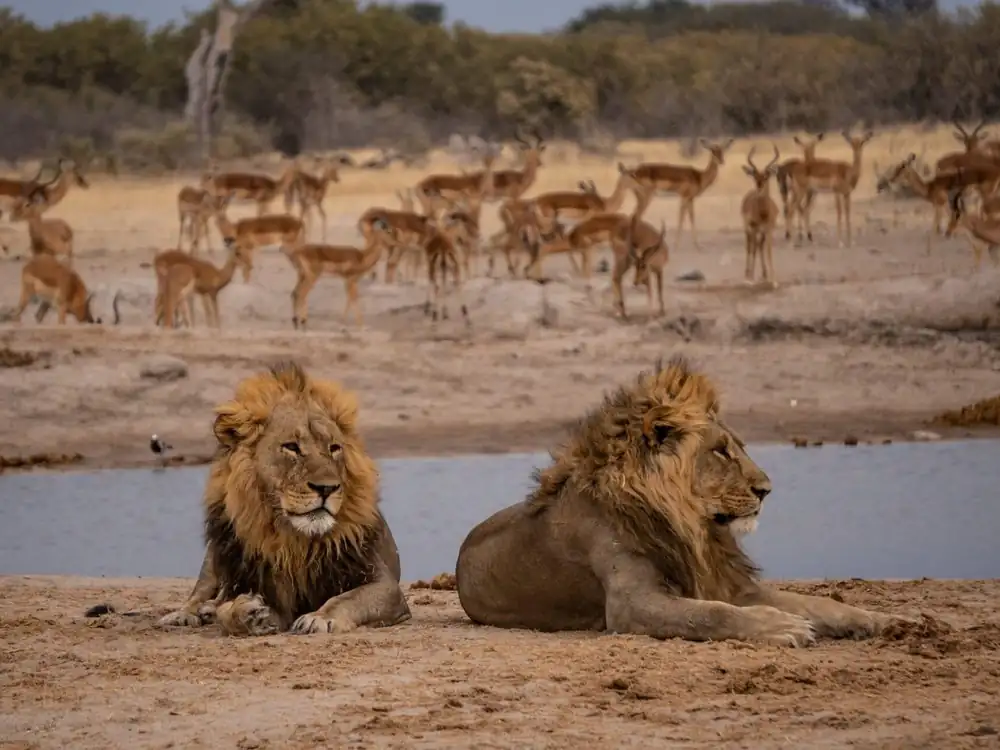
Hippo opening its mouth wide in the water, surrounded by other hippos Springbok in golden evening light in the Kalahari Two lions resting at a waterhole, a herd of impala behind them
When is the best time?

The best time to visit Botswana

Botswana can be visited all year round, but the regions behave very differently. One special feature: the Okavango Delta holds the most water in the middle of the dry season, because the flood from Angola only arrives months after the rains. The best time to travel therefore depends on which regions you visit and what you want to experience.

JFMAMJJASOND
Safari in Chobe, Moremi & the delta
Mokoro & boat in the Okavango Delta
Zebra migration Makgadikgadi & Nxai Pan
Central Kalahari
idealgoodless typical

May to October: dry season

The vegetation thins out and animals gather at rivers and waterholes – ideal for safaris in Chobe, Moremi and the delta. From June to August, nights and early mornings are cold; in October it gets very hot during the day.

June to August: high water in the delta

The flood from Angola reaches the delta over the course of the year and usually peaks around July. This is when mokoro and boat trips are at their best. How high the water rises varies from year to year.

November to April: rainy season

Short, heavy thunderstorms bring rain, the landscape turns green and many animals give birth. This is the most exciting time in the salt pans and the Central Kalahari. Some tracks become muddy and difficult to drive.

The chart shows typical patterns – rainfall and water levels vary from year to year.
We're happy to advise which regions and which style of travel suit your dates.

Just your style

How to travel Botswana

Well prepared

Botswana is not a country for spontaneous self-drivers. Distances are long, many tracks run through deep sand and become muddy in the rainy season; a 4x4 is compulsory in the national parks. Campsites in the parks must be booked and paid for in advance and are often fully booked well ahead in high season. In places there is neither fuel nor water. We plan realistic stages, recommend the right vehicle equipment and tell you honestly which regions suit your experience.

Combining travel styles

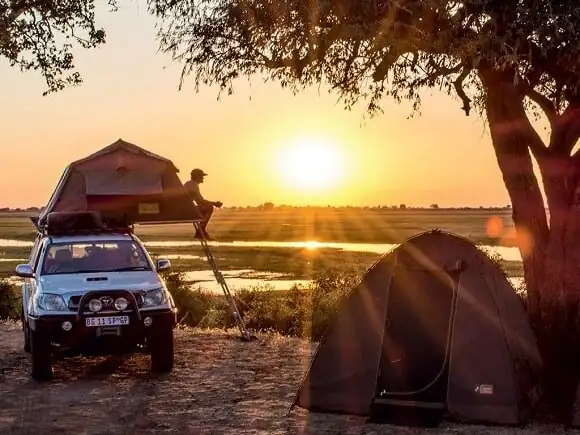
Many of our guests combine several styles: a few days with a rooftop tent in Chobe and Moremi, then a fly-in camp in the delta – or a lodge safari with a detour to Victoria Falls.
We put together the combination that suits your wishes and your budget.

One trip, many possibilities

Who is Botswana for?

Safari loversIntense wildlife viewing in Chobe, Moremi and the delta.
Nature loversWater worlds, salt pans and the vastness of the Kalahari.
PhotographersElephants at the river, baobabs and the delta from the air.
Experienced self-driversSandy tracks, bush campsites and real remoteness.
CouplesQuiet camps, sundowners by the water and nights under the stars.
Camping and lodgesBack-to-nature camping and comfortable lodges combine well.
Personally recommended

Our insider tips for Botswana

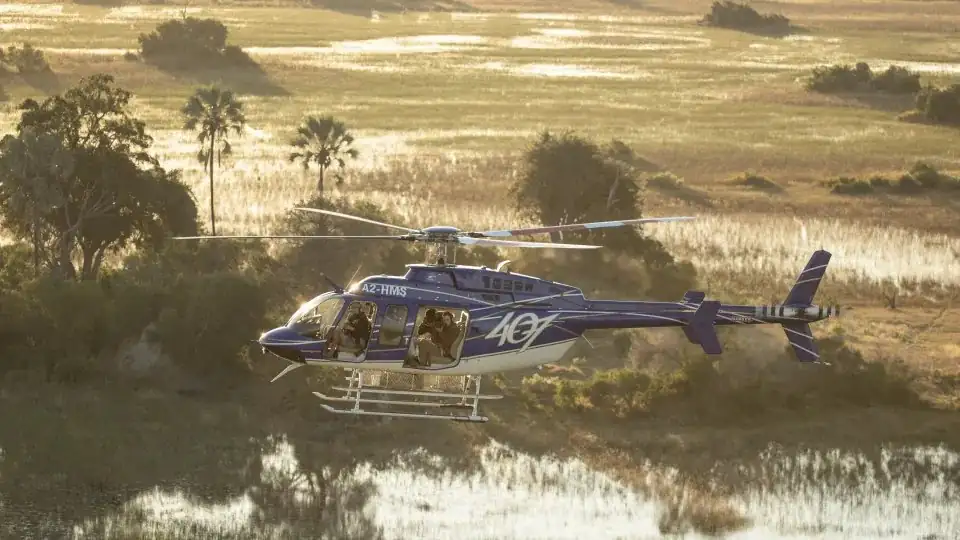
Helicopter with open doors over the Okavango Delta
I

Scenic flight over the Okavango Delta

Only from the air can you see how far the delta spreads: channels, islands and lagoons, with herds of elephant and buffalo in between. Scenic flights depart from Maun or from some camps, by light aircraft or helicopter. Route, duration and availability depend on the operator, the weather and the season.

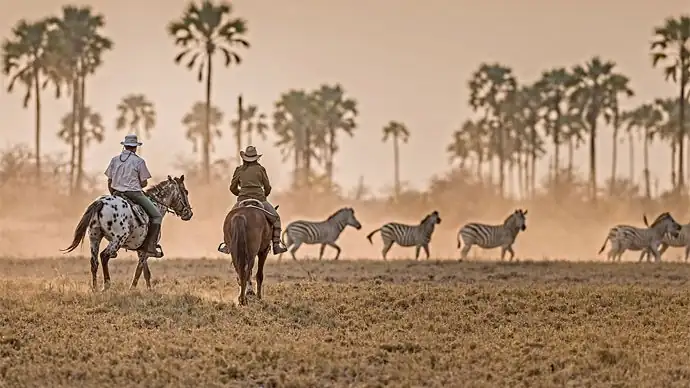
Two riders beside a herd of zebra in front of palm trees in the evening light
II

Horseback safaris in Botswana

On horseback you move quietly through the landscape and often get surprisingly close to animals. Riding safaris are offered mainly in the Okavango Delta and the Makgadikgadi Pans. In the delta you need to be a confident rider at all paces; there is usually a minimum age of around 12 and a weight limit of around 90 to 95 kg. We check the exact requirements with each operator.

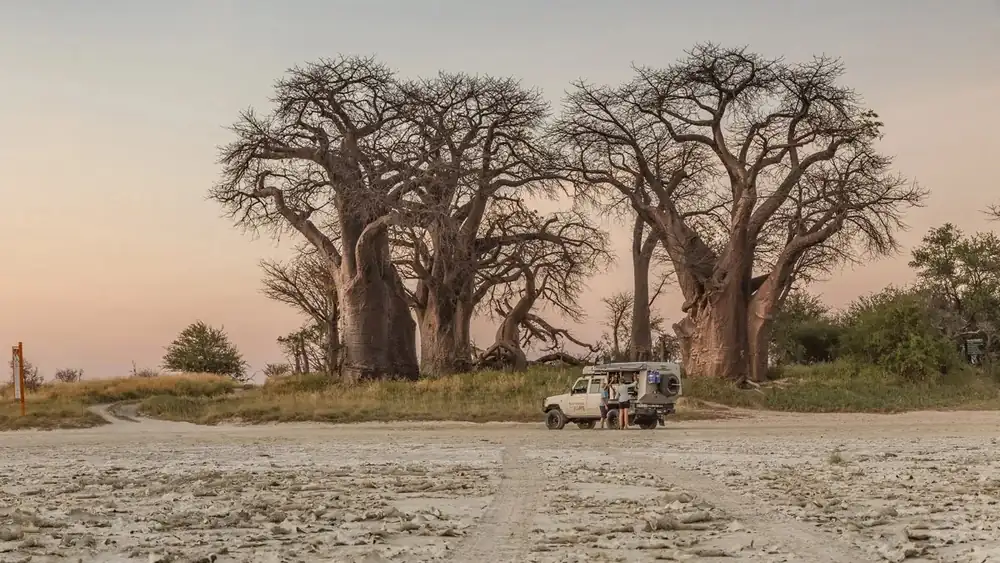
4x4 with rooftop tent in front of Baines' Baobabs at the edge of the salt pan
III

Breakfast at Baines' Baobabs

Set off early to Baines' Baobabs in Nxai Pan National Park: seven mighty baobabs on the edge of the Kudiakam Pan, painted by the artist Thomas Baines back in 1862. With a coffee and a snack you've brought along, you experience the vastness of the salt pan in the first light. Access is by 4x4 only, and park entry must be arranged in advance.

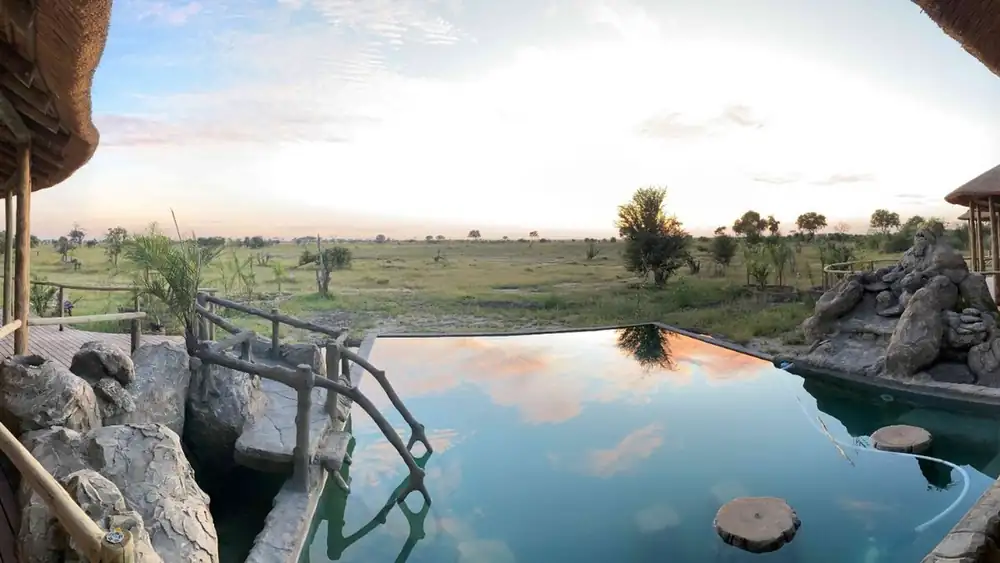
Lodge pool overlooking the savannah
IV

Camping with lodge comforts

Botswana has many campsites close to nature that are attached to a lodge. At some, campers may use facilities such as the pool, and if you don't feel like cooking after a long day, you can enjoy dinner at the lodge, depending on the property. We clarify what's possible for you when planning.

Good to know

Frequently asked questions about Botswana

When is the best time to visit Botswana?

For safaris in Chobe, Moremi and the Okavango Delta, the dry season from May to October is ideal, because the animals gather at rivers and waterholes. The delta usually holds the most water around July – the best time for mokoro and boat trips. In the rainy season from November to April, the Makgadikgadi Pans, Nxai Pan and the Central Kalahari are at their most exciting, although some tracks become muddy.

Is Botswana suitable for self-drivers?

Yes, but only if you're well prepared. Distances are long, many tracks run through deep sand, a 4x4 is compulsory in the national parks, and in places there is neither fuel nor water. Campsites in the parks must be booked in advance and fill up early in high season. We plan realistic stages and tell you honestly which regions suit your experience.

Which regions are best for a lodge safari?

The classics are the Okavango Delta with its private concessions, the Moremi Game Reserve and the Chobe Riverfront near Kasane. In the concessions, depending on the area, night drives, off-road driving and guided walks are also possible – with a limited number of guests. Savuti and the salt pans add completely different landscapes to the route.

What is the difference between a fly-in safari and a classic tour?

On a fly-in safari you fly by light aircraft from camp to camp and avoid long drives on sandy tracks. Many camps in the delta can only be reached by air anyway, and the guides on site take care of the game drives. On a 4x4 tour you are more independent and travel for less, but you need more time and driving experience. Luggage is limited on light aircraft, usually to soft bags – we'll give you the exact limit with your proposal.

Entry, visas and health

Current entry requirements and vaccination recommendations are available from your government's travel advice service. For German travellers, the German Federal Foreign Office provides details and links to online visa applications.

Botswana: travel advice from the German Federal Foreign Office (in German)
Africa, personally

Dreaming of Botswana?

We don't do off-the-peg trips. Whether with a rooftop tent, as a self-drive with lodges or on a lodge safari: we put together every Botswana trip around your wishes, the time you have and your budget. We look forward to planning your trip with you.